How this 30-year-old CEO went from being a fashion marketeer to a waste management advocate
From flitting through the champagne-steeped roster of swish events such every bit the Audi Style Festival Singapore, to finding himself routinely trudging knee joint-deep in fetid waste matter, it'due south apparent that Nathaniel Phua executes his career switches with loping steps.
But information technology was circumstance – rather than whim – that prompted him to go out backside his glamorous career in fashion marketing and bring together waste product direction company Tiong Lam Supplies, more than five years ago.
"My father-in-law wasn't in the all-time country of health and needed someone to support his business concern while he took time off to recuperate," he shared.
While this eventually led him to form his own biotechnology firm – more on that later – his emerge into the family business concern wasn't exactly serendipitous. Yous could even say that he was greeted by a riot of unsavoury amalgamations he has since become accepted to.
"I was definitely squeamish at the outset. The first thing that hits you when you walk through the doors (of a waste management facility) is the odour. Nosotros don't just bargain with i blazon of waste, and after a while, yous starting time to non understand what you lot are smelling," said the boyish entrepreneur, before yielding to nervous laughter.
READ> How Singapore's restaurateurs are ascension to the challenges of sustainability
Despite the muck, malodorousness and general inconveniences of handling waste – rising in the wee hours to handle waste material drove matters, we are told, is commonplace – the unlikely protege has taken to his new role with much verve.
If anything, beingness involved in Tiong Lam'southward daily operations, where he sees a staggering thirty- to 40 tonnes of food waste per twenty-four hour period, has given the thirty-twelvemonth-old an acute sensation of Singapore'southward swelling waste problem. According to a report by the National Environment Agency, the country generated seven.23 one thousand thousand tonnes of solid waste material in 2019.
"As a consumer viewing waste material in linear terms, I only encounter what I eat and dispose, which doesn't amount to much. But in food manufacturing, it's a whole different story; I saw a lot of resource being wasted. In that location's still and so much we could exist doing with the advancement of technology, such as farther upcycling the waste product or putting it back into the food concatenation," he explained.
"As a consumer viewing waste material in linear terms, I but see what I eat and dispose, which doesn't amount to much. Just in food manufacturing, information technology'southward a whole dissimilar story." – Nathaniel Phua
LOOP OF Thought
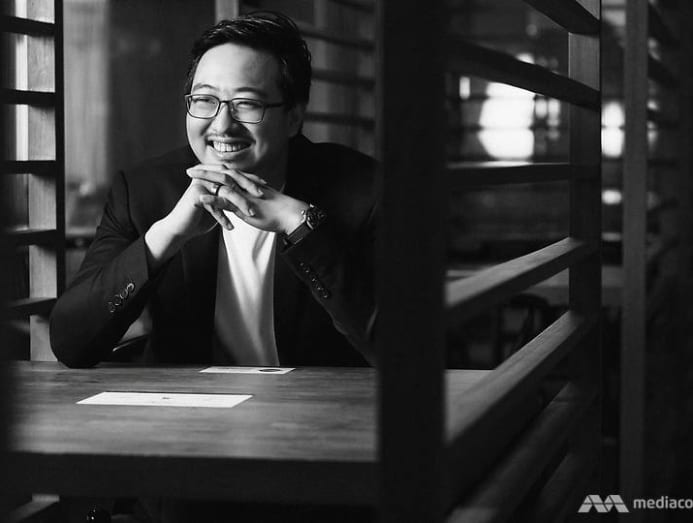
The round economy, which aims to reduce waste material and continually employ resource, isn't an alien concept to Phua – who was initially acquainted with it on a volunteer mission in rural Thailand.
"It's fascinating how locals were able to enjoy a comfortable lifestyle by making the best apply of their resources without producing too much; fifty-fifty toys were made of dried leaves," he recounted.
While Tiong Lam transforms food waste product into fish feed for aquaculture farms, Phua delved deeper into food waste valorisation, whereby the latter and its by-products are converted into higher value products that contribute to the nutrient supply concatenation.
While helping to run his father-in-constabulary'southward firm in 2018, he began laying the groundwork for Ento Industries, which breeds black soldier flies that consume food waste product and can exist parlayed into useful products.
In their larval phase, black soldier flies can hoover up well-nigh any organic matter, consuming upward to four times their weight a day. The nutrient-rich insect frass is used equally fertiliser for agriculture, while their larvae is harvested every bit high-value feedstock sold to fish farms – thereby creating an cease-to-end solution for various players in the nutrient production sector.
READ> Singapore's pinnacle restaurants buy their produce from local farmers; so should you
Incepted in June 2020, the subsidiary of Tiong Lam was awarded a grant under the DBS Foundation Social Enterprise Grant Programme in November of the same twelvemonth. The foundation awarded Due south$1.four 1000000 in funding to 13 social enterprises.
With proceeds from the grant, Ento Industries is primed to move from their 500 sq. ft. facility housed within its parent visitor, into a 5,000 sq. ft. facility with the capacity to process between x and 20 tonnes of waste product per month. Currently, its writhing ground forces of critters consumes between three and v tonnes of waste per month.
Getting there, the unassuming CEO says, has engendered an arduous journey with the trappings of a B-grade horror flick. For one, the vagaries of working with live insects can be unsettling, to say the least. He has arrived at work to discover the facility blanketed in thousands of squirming larvae, equally conditions were not conducive to feeding.
"You may walk out of a restaurant if you don't like the ambience; it's the same for them. They start to escape from the trays when they are non comfortable with higher temperatures or unsuitable food sources. They are stubborn and fussy creatures, very temperamental," he acknowledged.
Nonetheless, for his charges' idiosyncrasies, Phua regards them with what seems to vacillate between fascination, benevolence and dread. While he waxes effusive on their intrinsic role in nature, he flinchingly reveals that he's been beset by dreams of larvae burrowing into his ears.
All dark terrors considered, it is worth noting that black soldier flies do not feed in adult-stage and therefore aren't disease vectors. Working with them does need a level of persnicketiness, though. This includes calculation microbes to blended food waste material to extract nutrients for the larvae, while closely monitoring the latter'southward behaviour and life bicycle.
"Information technology'southward fascinating how locals [in rural Thailand are] able to relish a comfortable lifestyle by making the all-time use of their resources without producing too much; even toys were fabricated of stale leaves." – Nathaniel Phua
ENTO 1.2
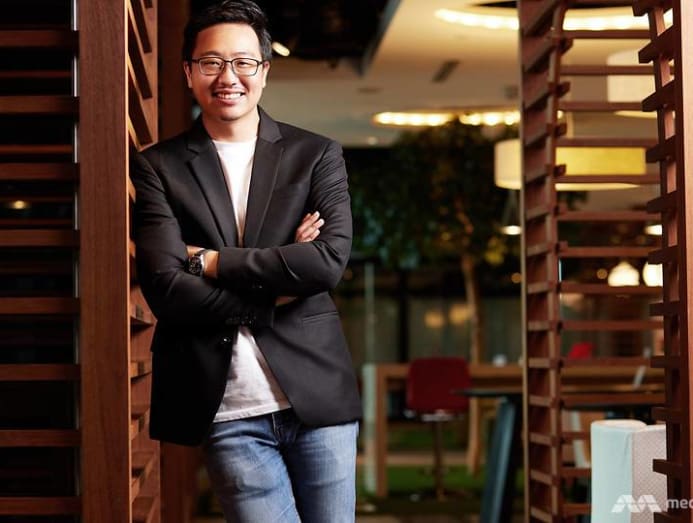
For at present, the visitor is withal beavering away at its experimentation stage, partnering the National University of Singapore on a research project to rear fast-breeding larvae with voracious appetites. Tapping proceeds from the DBS Foundation grant, it has embarked on a engineering transfer plan with industry experts from China and the United states. On the commercial front, the visitor counts restaurants, manufacturers, distributors and those in the agriculture sector among its customers.
Though the early-stage company's consistent financial output precludes it from disclosing tangible profit, Phua offered that it has charted an uptick in involvement in its services – along with a 10- to 20 per cent increase in sales – since the pandemic hitting. This, he says, has underscored the importance of ramping up local food product, which dovetailed with the government's plan to produce xxx per cent of the nation's nutrient supply by 2030.
READ> Bjorn Low: 'Every Singaporean tin help Singapore go more than food resilient'
"COVID-19 was kind of a shock to Singapore, where there was a large group of people clearing out supermarkets. While there wasn't an imminent threat of running out of supplies, there's a fear of it happening in the future. The 30x30 goal really came at the correct time," he said, noting the public's visceral reaction to news reports on stockpiling.
With more local farms in the pipeline, plus the Lim Chu Kang area earmarked for evolution into a high-tech agri-food cluster, the entrepreneur envisions this translating into a robust merchandise for Ento Industries. He has fix his sights on operating a fully-automatic facility, and is slated to acquit a pilot to examination the visitor'due south abilities to run at commercial scale in the starting time quarter of 2021. Not to mention, he is also toying with the idea of skewing the house towards carbon neutrality – an aggressive remit.
But it'south clear that optimism – fifty-fifty when faced with a welter of worms – is one of Phua's endearing traits. The father-of-ane views the circular economy as a ways to tackling overconsumption.
"I read a United Nations written report that projected an additional i.8 billion people who nosotros won't exist able to feed by 2050, at our electric current rate of consumption. And I keep thinking that my five-year-old son will alive in a world that is the result of the decisions we make today. Obviously, I cannot ensure change in the nutrient manufacture, merely I know I can play my part and assistance drive it forward," he ended.
"Evidently, I cannot ensure alter in the nutrient industry, but I know I can play my part and help drive it frontward." – Nathaniel Phua
READ> The Cameron Highlands farmers supplying upstanding, organic produce to Singapore
Source: https://cnalifestyle.channelnewsasia.com/people/30-year-old-ceo-nathaniel-phua-ento-industries-singapore-246781

Enregistrer un commentaire for "How this 30-year-old CEO went from being a fashion marketeer to a waste management advocate"